Welcome!
What are rRFs?
rRNA-derived fragments (rRFs) are a class of emerging post-transcriptional regulators of gene expression likely binding to the transcripts of target genes. They are functional fragments derived from ribosomal RNAs (rRNAs).
- rRFs and target pairs deposited in rRFTargetDB are characterized from in vivo crosslinked Argonaute1(Ago1)-RNA complexes based on experimental data in human HEK293 cells.
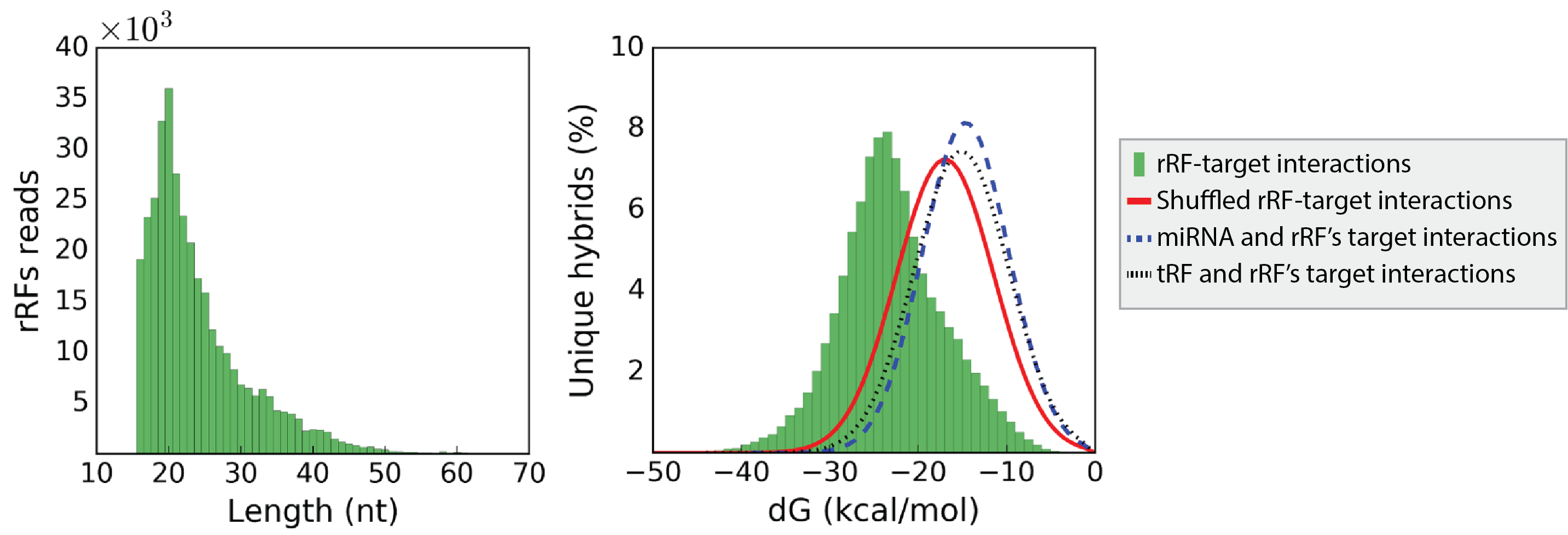
- The vast majority of Ago1-loaded rRFs are 16-25 nt long, with the most frequent length of 20 nt.
- rRF and target interactions are highly specific, as indicated by the significantly lower minimum free energy (MFE) of hybridization for rRF-target pairs compared to randomized controls.
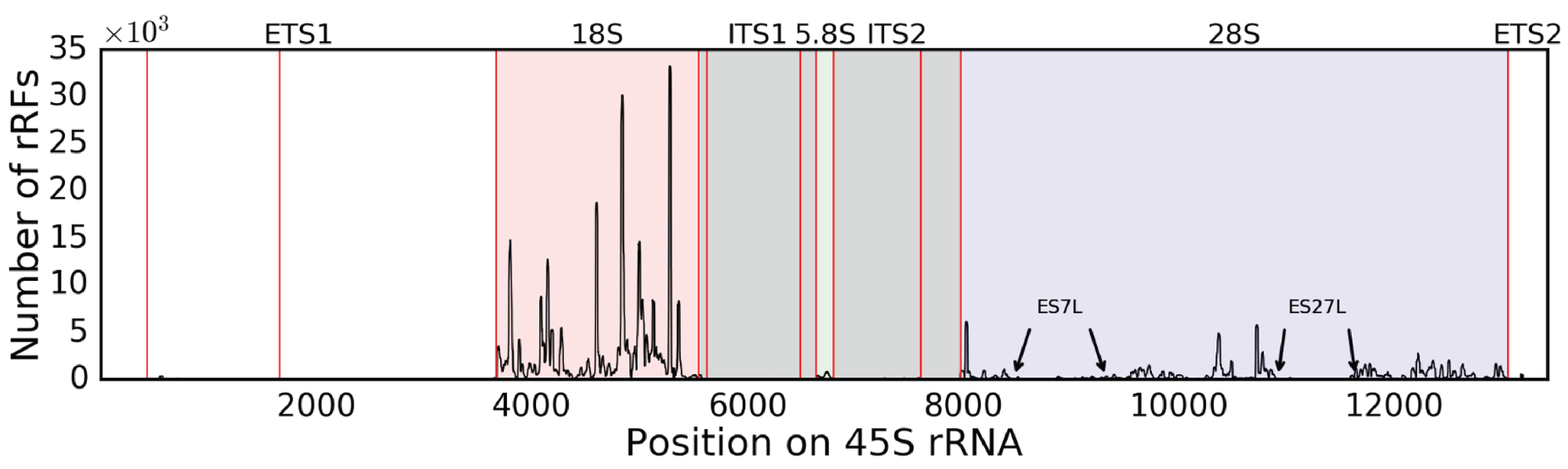
- rRF are non-uniformly generated across the rRNAs.
Look for rRFs based on their biogenesis?
How do we characterize rRFs?
Hybrid
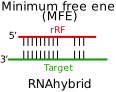
MFE assesses the strength of interaction between rRFs and target RNAs.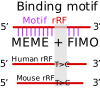
Motif
Binding motif is the potential region in rRFs used for target interaction. T>C mutation indicates the potential Ago-crosslinking site.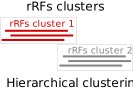
Cluster
To reduce the redundancy among highly similar rRF isoforms, they are clustered based on their coordinates on the parental rRNAs.
Biogenesis
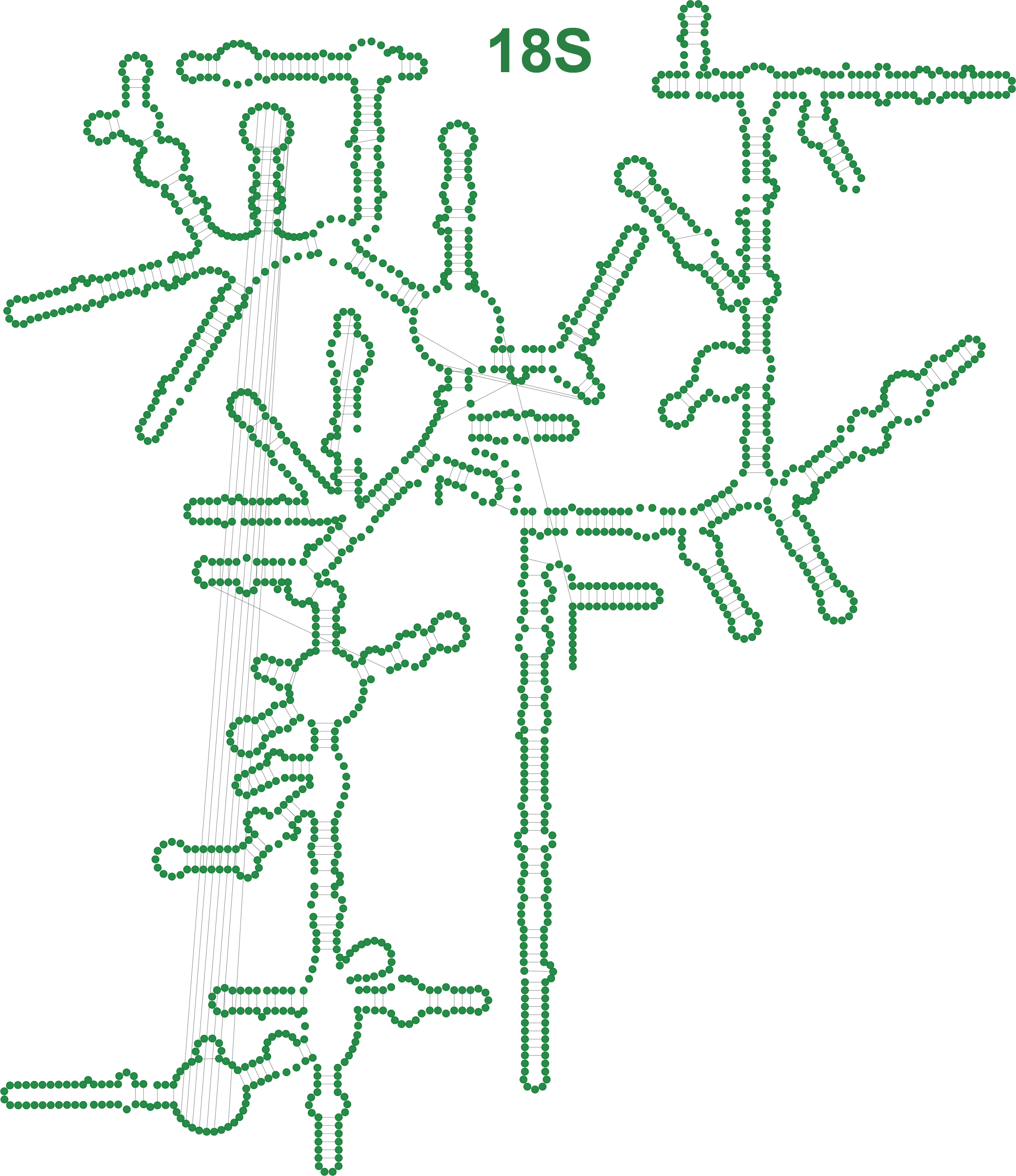
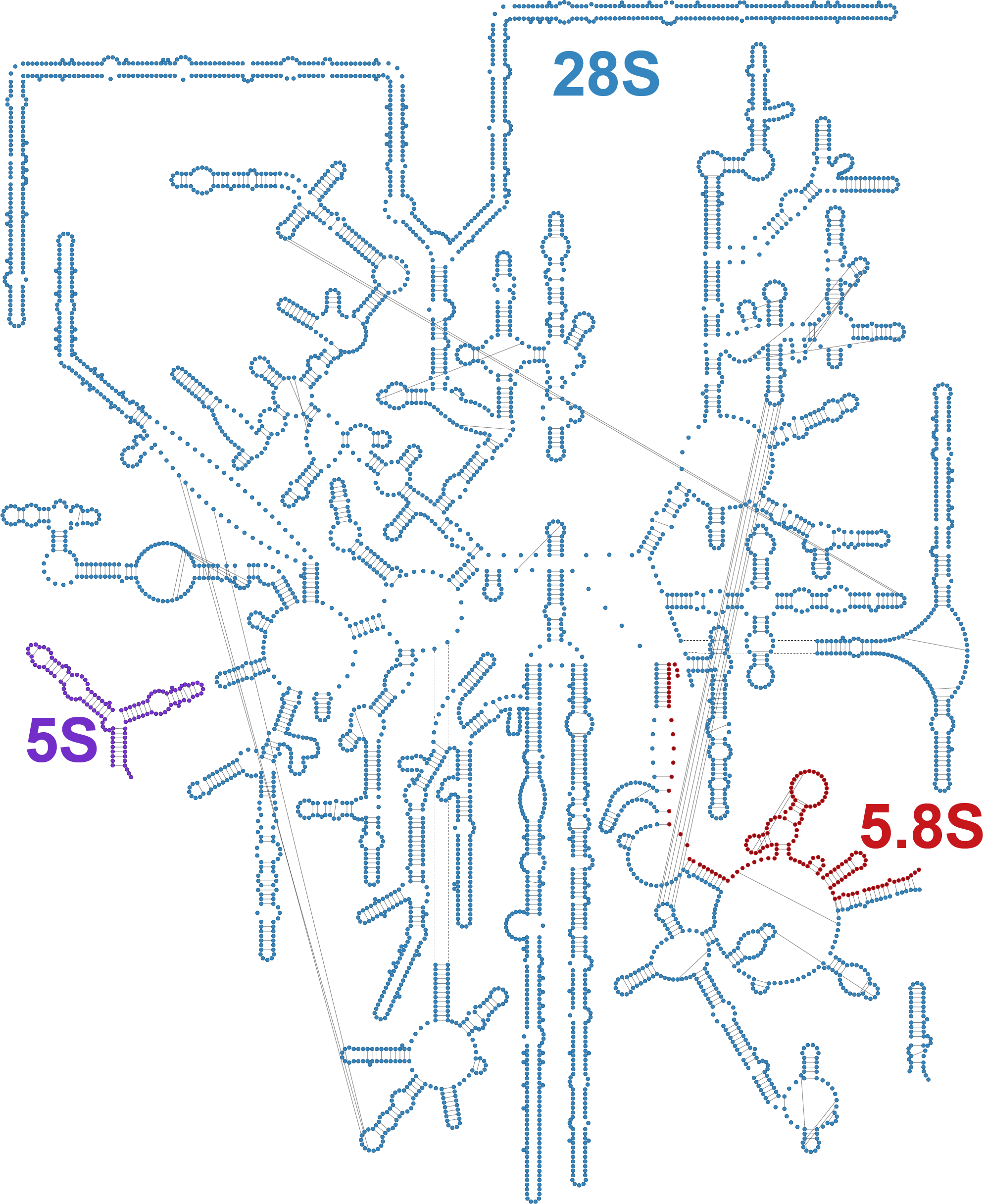
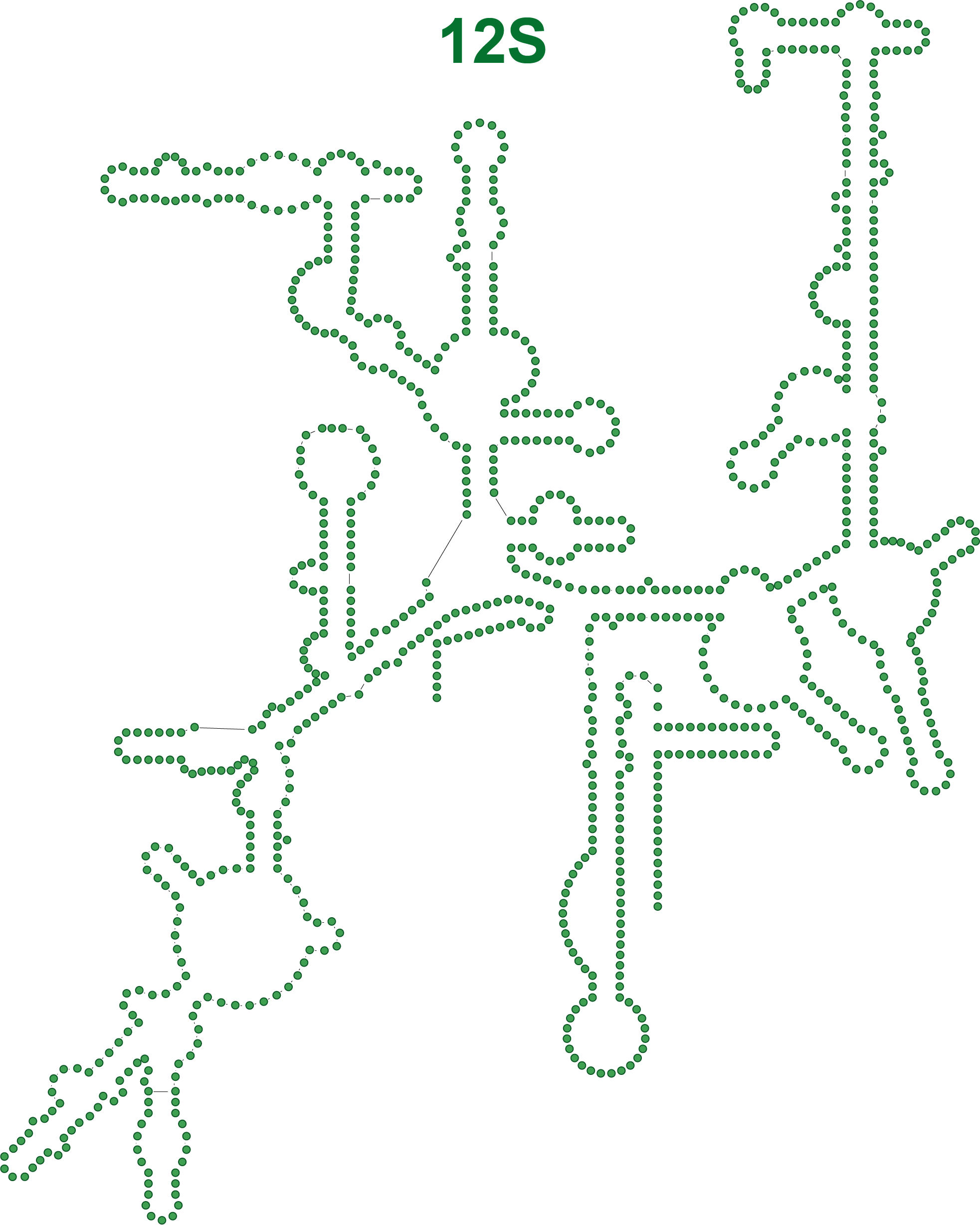
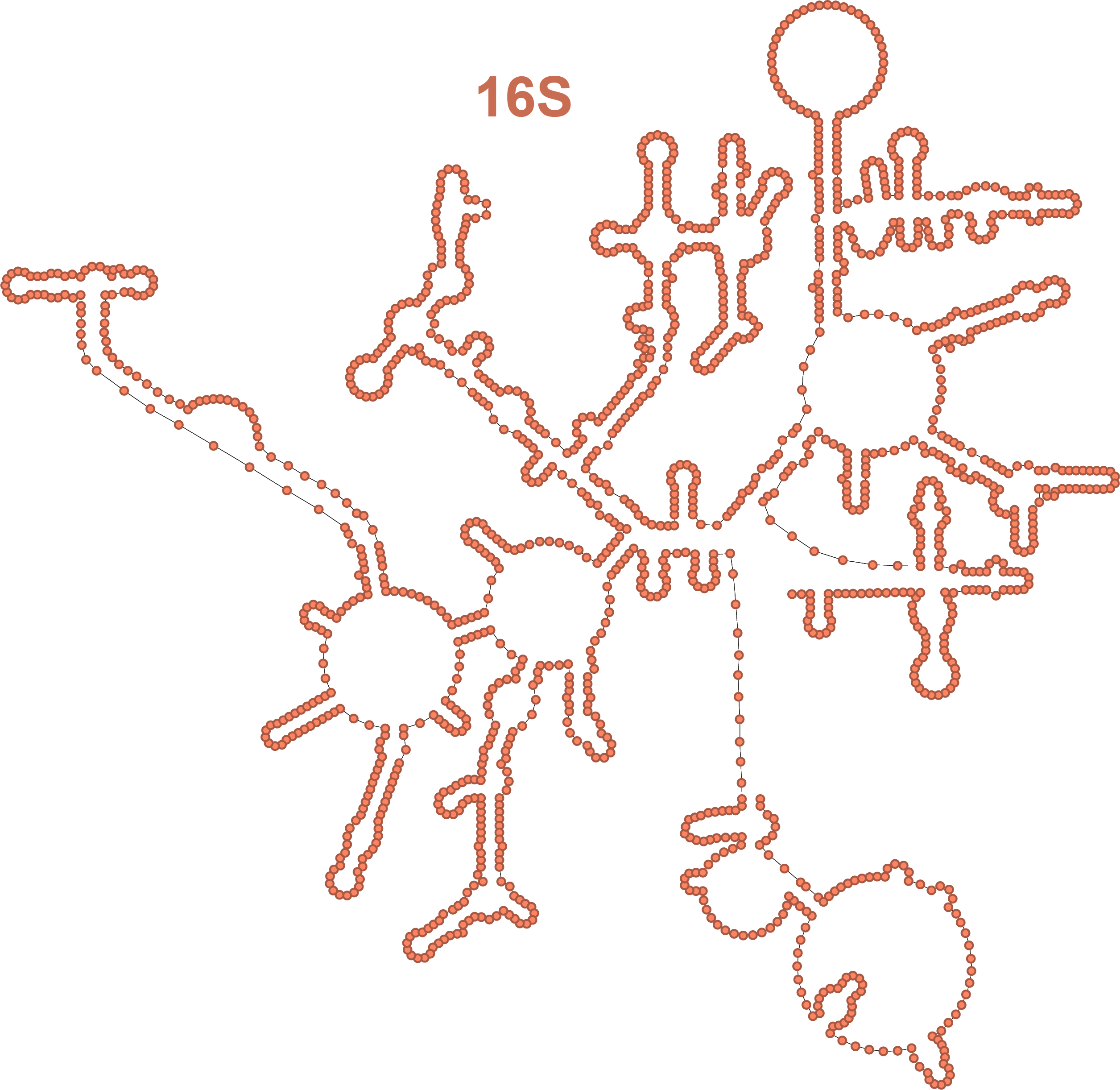
rRFs are aligned to rRNAs to visualize their biogenesis on secondary structures.What we did?
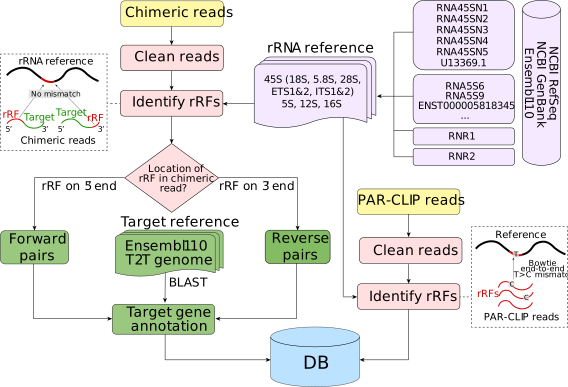
Below we summarize rigorous and comprehensive analysis that has been performed to characterize Ago1-associated rRF-target pairs from the earlier transcriptome-scale CLASH Ago1 screens in human HEK293 cell line, which produced chimeras of small RNAs and their putative targets. Reference sequenced obtained from NCBI and Ensembl (top right) were used to map chimeric reads and identify rRFs (top left). After mapping, targets were identified (center left), forward (rRF on the 5’ end and target on the 3’ end) and reverse (rRF on 3’ end and target on 5’ end) chimeric reads are used for grouping targets of each rRF. PAR-CLIP reads (center right) are used as evidence supporting the potential binding sites detected as common motifs in the targets of that rRF.
What do we store in rRFTargetDB
- What we include?
- What else is possibly included?
- What we did not include?
rRFtargetDB is populated by ~163,000 experimentally determined unique rRF-mRNA pairs (~60,000 supported by ≥2 reads).
Despite the unclear biological significance of non-coding RNAs paired with rRFs in CLASH chimeras, we kept them in rRFtargetDB for completeness. 30,000 rRF isoforms produced >385,000 (>156,000 with ≥2 reads) chimeras with all types of RNA targets (mRNAs and non-coding RNAs).
Reads that are completely aligned to the T2T genome or have < 75% length aligned to rRF and its target sequence or have rRFs < 16 nts in length are excluded.